14 Types of Olive Trees Explained: Real, Faux, Arbequina, Tea, Texas & More
“Every olive tree carries a thousand stories — some in their fruit, some in their roots, and some simply in the way the light catches their silver leaves.”
When I first fell in love with olive trees, I had no idea there were so many fascinating varieties waiting to be discovered. I started with a simple real olive tree on my balcony, and that one small plant opened up an entire world of possibilities. Over the years, I’ve nurtured real Arbequinas that rewarded me with my own olive oil, welcomed faux beauties into dark corners of my home, and even cried a little when my sweet olive tree finally bloomed and filled my garden with that incredible fragrance that smells like apricot jam meets old-world perfume.
Whether you’re here because you’re dreaming of your first types of olive trees explained journey, or you’re a seasoned olive enthusiast looking to expand your collection, this guide is your comprehensive companion. We’re going to explore everything from the majestic real olive tree that can live for thousands of years to the clever faux alternatives that bring Mediterranean charm to spaces where nothing living would survive. I’ll share my personal successes and spectacular failures (yes, I’ve killed a few — it happens to the best of us), so you can skip the hard lessons and enjoy the rewarding part of growing these magnificent trees.
🌿 What You’ll Discover Today
By the end of this guide, you’ll know exactly which olive tree is perfect for your space, your climate, and your lifestyle — whether that means zero maintenance or maximum harvest.
Why Choose a Real Olive Tree Over Artificial Alternatives
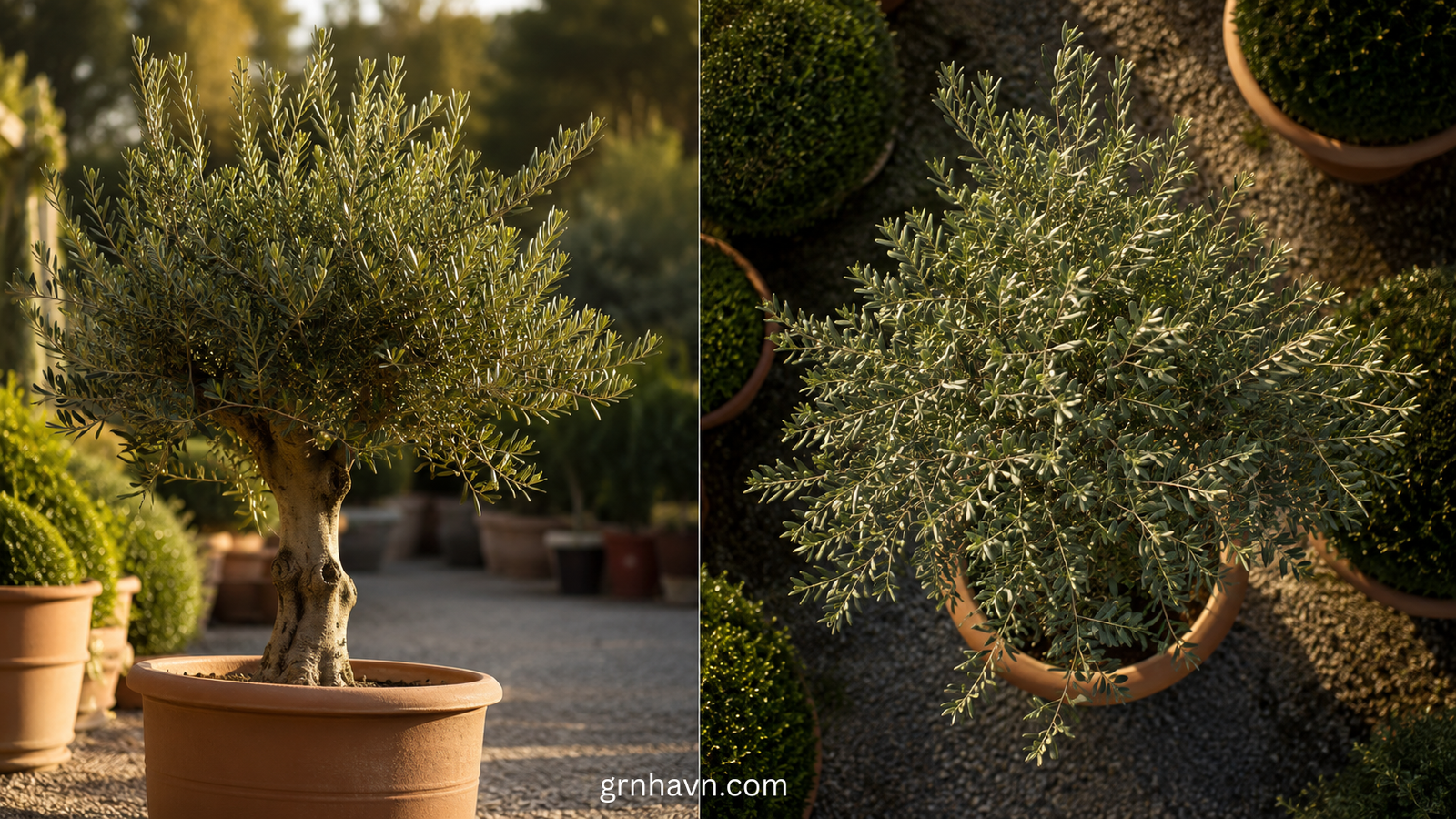
Let me tell you about the first real olive tree I ever brought home. It was a drizzly October afternoon, and I was wandering through a local nursery when I spotted this gnarled, ancient-looking specimen with silver-green leaves that seemed to shimmer even in the grey light. Something about its weathered trunk and determined demeanor spoke to me. I bought it on impulse, carried it home on the bus (the looks I got!), and planted it in a large pot on my balcony. That was seven years ago, and that little tree has become the heart of my outdoor space.
There’s something irreplaceably magical about a living olive tree. These remarkable plants can live for hundreds — even thousands — of years. I’m not exaggerating when I say your great-grandchildren might inherit the very same tree you plant today. The oldest known olive trees in the world are over 3,000 years old, still producing fruit in Crete and Sardinia. That’s generations of stories wrapped in one silvery canopy.
Beyond their longevity, real olive trees offer practical benefits that artificial alternatives simply can’t match. They’re exceptional air purifiers, naturally filtering toxins from your environment while releasing oxygen. In my experience, having a living olive tree on my balcony has noticeably improved the air quality around my entire apartment. They also increase property value — studies consistently show that mature landscaping, including fruit trees, can increase home values by 10-20%.
Now, I’ll be honest with you: growing a real olive tree does require some commitment. They need at least 6 hours of direct sunlight daily — think Mediterranean climate here. Watering needs are moderate; they’re drought-tolerant once established but appreciate consistent moisture during growing season. Soil pH should be slightly alkaline (around 7.0-8.0), and they’ll thank you for annual pruning to maintain shape and encourage fruit production. But here’s the thing — once you understand their needs, olive trees are surprisingly forgiving. They thrive on neglect more than coddling.
“A real olive tree doesn’t just decorate your space — it becomes a living companion through the seasons, dropping its tiny fragrant flowers in spring and ripened fruit in autumn.”
Is a Fake Olive Tree the Best Solution for Low-Light Homes
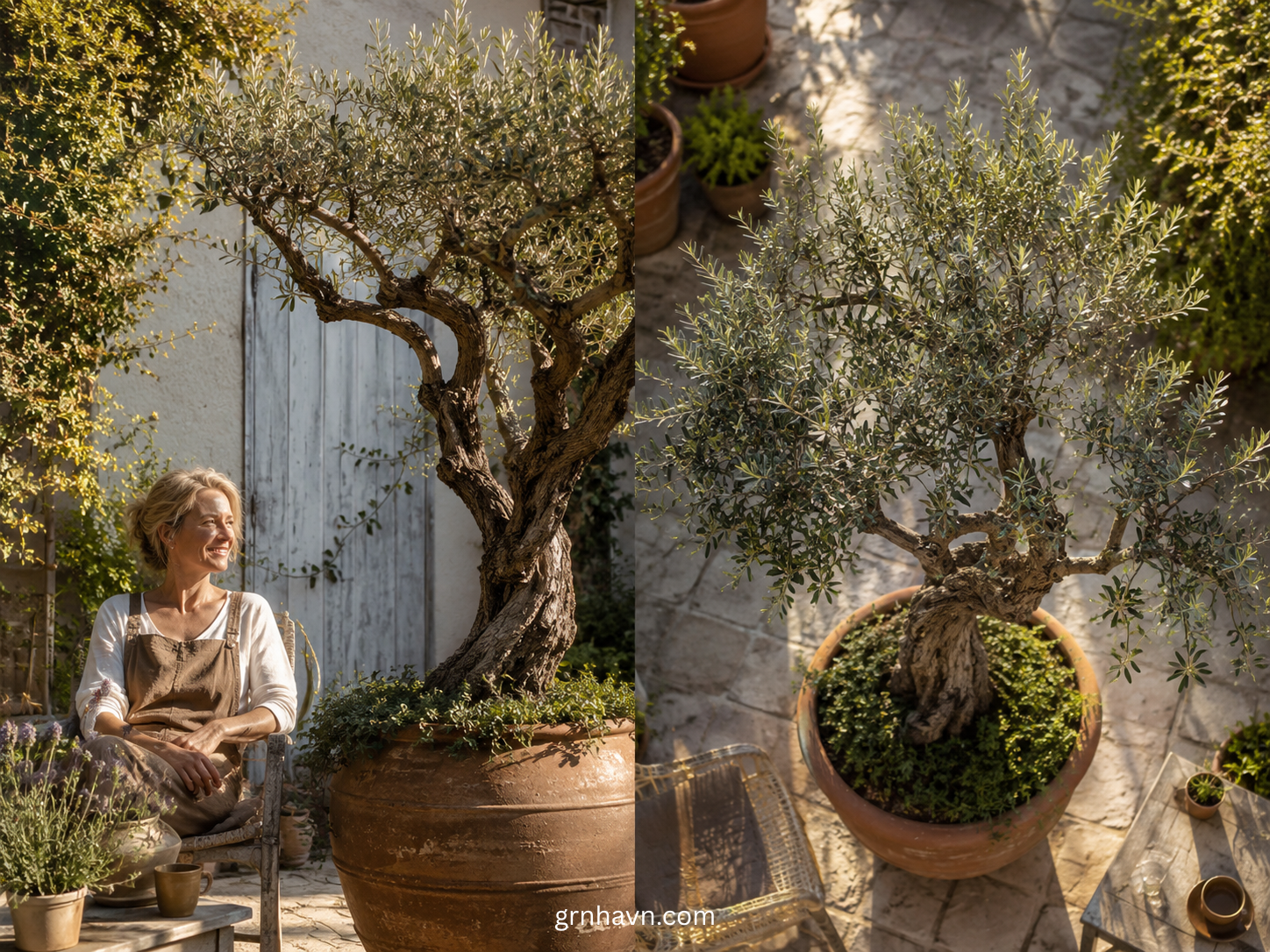
My friend Sarah lives in a ground-floor apartment where the only windows face a narrow alley. For years, she felt left out of the plant parent trend — every time she’d bring home a beautiful houseplant, it would slowly decline and die despite her best efforts. The light just wasn’t enough. Then she discovered fake olive trees, and honestly, her space transformed completely. Now she has a stunning faux olive tree in her living room that looks so realistic, I’ve actually tried to pick an olive from it (embarrassing, but true!).
Fake olive trees are absolute lifesavers for certain situations. If you’re a renter who can’t change the lighting conditions, or if your home has rooms that simply don’t get natural light, a quality faux olive tree gives you that Mediterranean aesthetic without the heartbreak of watching a living plant struggle. They’re also perfect for office spaces, bathrooms, and hallways that might be too dark or too traffic-heavy for real plants.
But here’s what took me years to learn: not all fake olive trees are created equal. I made the mistake of buying a cheap one from a discount store early on, and let me tell you — it looked exactly like what it was: plastic. The leaves were impossibly shiny (in an unnatural way), the trunk was a uniform brown cylinder, and it just screamed “fake.” It went straight to the trash. The difference with high-end faux trees is remarkable. Premium options feature realistic trunk textures (often made from natural materials like wrapped paper or foam that’s been hand-painted), and leaves made from high-quality silk or polyester that catch the light just like real foliage.
When choosing a fake olive tree, consider where you’ll place it. For low-light areas, a faux tree is genuinely your best option — it requires absolutely no light to “thrive.” Look for trees with a weighted base (often sand-filled) so they won’t tip over easily. Height matters too; for a low-light corner, a taller tree actually draws the eye upward and makes the space feel more intentional. I’ve seen fake olive trees work beautifully in bedrooms, home offices, and even windowless entryways where they create a welcoming first impression.
“For spaces where no plant could survive, a beautiful faux olive tree doesn’t fake happiness — it creates it.”
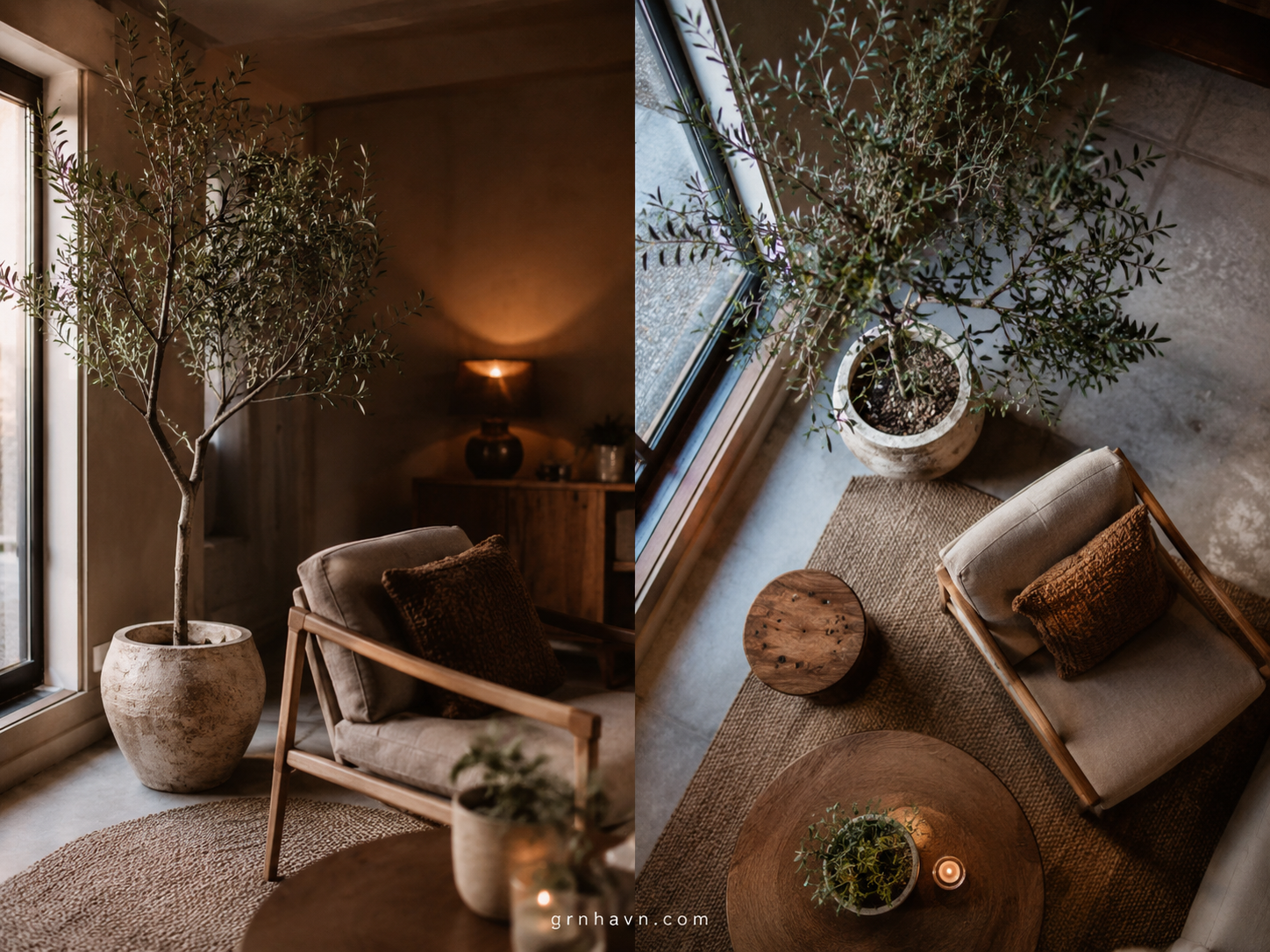
Where to find locally: Check home goods stores like HomeGoods, TJ Maxx, or Marshall’s for seasonal faux tree arrivals. IKEA also carries budget-friendly artificial plants year-round. For immediate placement, grab a basic ceramic or woven pot to hide the nursery container.
Alternative sourcing: Facebook Marketplace and local thrift stores often have barely-used faux trees from people who moved or redecorated. Look for higher-end brands like Nearly Natural or Pure Beauty — these hold up for years without fading.
Quick online options: Amazon has excellent premium faux olive trees with real wood trunks. Search for “silk olive tree” or “realistic faux olive tree” and read reviews carefully. Many come with removable pot covers that make styling easy.
How to Choose a Faux Olive Tree That Looks Surprisingly Real
The word “faux” gets a bad rap. People hear “faux” and think “cheap fake,” but that’s really not fair to the incredible advances in artificial plant technology. “Faux” actually implies high-end realism — it’s the difference between a $20 Halloween mask and a Hollywood-grade prosthetic. When it comes to olive trees, the difference between cheap fakes and premium faux can be thousands of dollars in visual impact.
Let me break down what makes a faux olive tree look surprisingly real. First, examine the trunk. Real olive trees have gnarled, twisting trunks with beautiful texture — not smooth cylinders. Look for faux trees with trunks made from wrapped natural materials like bark, paper mache, or hand-painted resin. Some premium options even use actual driftwood or reclaimed olive wood. The trunk should have slight irregularities, varying thickness, and visible “character.”
Next, let’s talk leaves. Real olive leaves are a distinctive grey-green color with a slightly fuzzy texture on the underside. They’re elongated and sway gently in the breeze. Cheap fakes use smooth, overly shiny plastic leaves that catch light unnaturally. Premium faux trees use silk leaves or high-quality polyester that have that subtle matte finish and gentle movement. Some even have two-toned leaves — darker green on top, lighter underneath — just like the real thing.
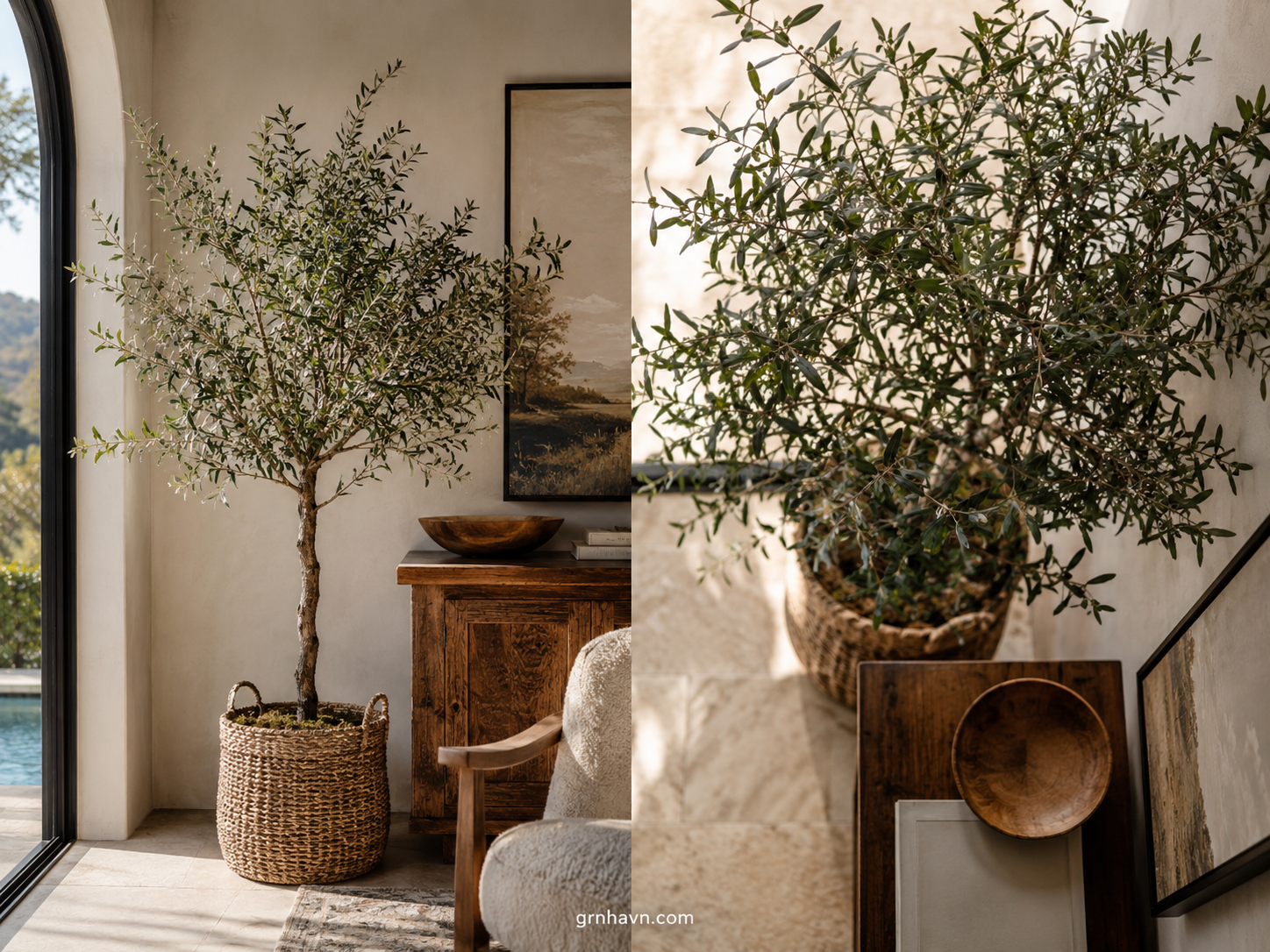
Here’s a game-changer: the pot matters more than you think. Most cheap faux trees come in basic black plastic nursery pots that immediately give away that they’re artificial. Upgrade to a ceramic pot with a reactive glaze, a natural rattan basket, or a textured concrete planter. Even just repotting into a better container can triple the realism factor. I always recommend investing in a pot that’s 1/3 the height of your tree for visual balance.
“The secret to a believable faux olive tree isn’t in the leaves — it’s in the details: the imperfect trunk, the weighted base, the beautiful pot.”
Are Artificial Olive Trees Worth Buying for Busy Homeowners
I used to joke that I had a black thumb. I’d forget to water, then overwater in panic. I’d move plants around chasing light, then stress them out. I’d see a tiny bug and completely overreact. My poor plants never stood a chance. Then I discovered artificial olive trees, and honestly? My home finally looked like the cozy, put-together space I’d always dreamed of, without the constant anxiety about whether my plants were dying.
For busy homeowners, artificial olive trees genuinely are worth the investment. Let’s do the math on time savings. A real olive tree needs weekly attention: checking soil moisture, adjusting watering based on season, monthly fertilizing during growing season, annual pruning, pest monitoring, and winter protection if you live in a cold climate. An artificial olive tree? Zero watering, zero pruning, zero fertilizing, zero pest control. You literally just dust the leaves occasionally.
The cost comparison is also interesting. A quality real olive tree might cost $50-150 depending on size, plus ongoing costs for soil, fertilizer, and tools. A premium faux olive tree costs $100-400 but lasts 5-10 years with essentially zero maintenance. Factor in that real trees might need winter protection or replacement if they don’t survive your climate, and the economics become even more compelling for busy people.
One thing that might surprise you: artificial olive trees are perfect for specific challenging situations. Rental homes where you can’t modify anything? Artificial. Drought-prone areas where watering restrictions make living plants difficult? Artificial. Commercial spaces like restaurants, hotels, or offices that need consistent aesthetics without hiring gardeners? Absolutely artificial. I’ve seen artificial olive trees transform sterile corporate lobbies into warm, welcoming spaces that employees and customers alike genuinely appreciate.
“Sometimes the most sustainable choice is the one that doesn’t die. An artificial tree that lasts a decade beats buying three real ones that didn’t make it through winter.”

Tired of Messy Olive Fruit? A Fruitless Olive Tree Could Be the Fix
Picture this: it’s late summer, and you’ve been nurturing your beautiful olive tree all year. The leaves are silver and stunning, the form is elegant — and then the fruit starts dropping. First, it stains your pristine concrete patio with dark purple-black spots that won’t scrub out. Then the birds discover your tree and turn it into their personal buffet, leaving mess everywhere. And that smell? When fallen olives start to decompose, they create an almost alcoholic, rotting fruit scent that can be overwhelming.
I learned about fruitless olive trees the hard way. After two seasons of battling olive stains on my driveway and explaining to neighbors why my tree smelled like overripe fruit, I started researching alternatives. That’s when I discovered Swan Hill and Wilsonii — two popular fruitless varieties that give you all the Mediterranean beauty of an olive tree without the messy fruit production.
These fruitless varieties are specially bred or selected to be sterile, meaning they produce very few to no olives at all. Swan Hill was discovered in Australia and has become incredibly popular in the United States — it’s certified fruitless and widely available. Wilsonii is another common variety, sometimes called “fruitless olive” in nursery catalogs. Both maintain the beautiful silvery foliage, gnarled trunk, and graceful form that makes olive trees so desirable.
Where do fruitless olives thrive? They’re perfectly suited for USDA zones 8-11 (that’s most of the southern US, from California to Florida, and many Mediterranean-climate areas in Europe). They handle heat beautifully, are drought-tolerant once established, and don’t mind poor soil. Place them near pools where falling fruit would be a nightmare, along driveways where stains are a problem, or in small patios where you’d rather have the aesthetic without the maintenance. If you live in a colder climate (zones 6-7), you can still grow fruitless olives in containers and bring them inside for winter.
“A fruitless olive tree gives you the Mediterranean dream without the cleanup nightmare — all the beauty, none of the staining.”
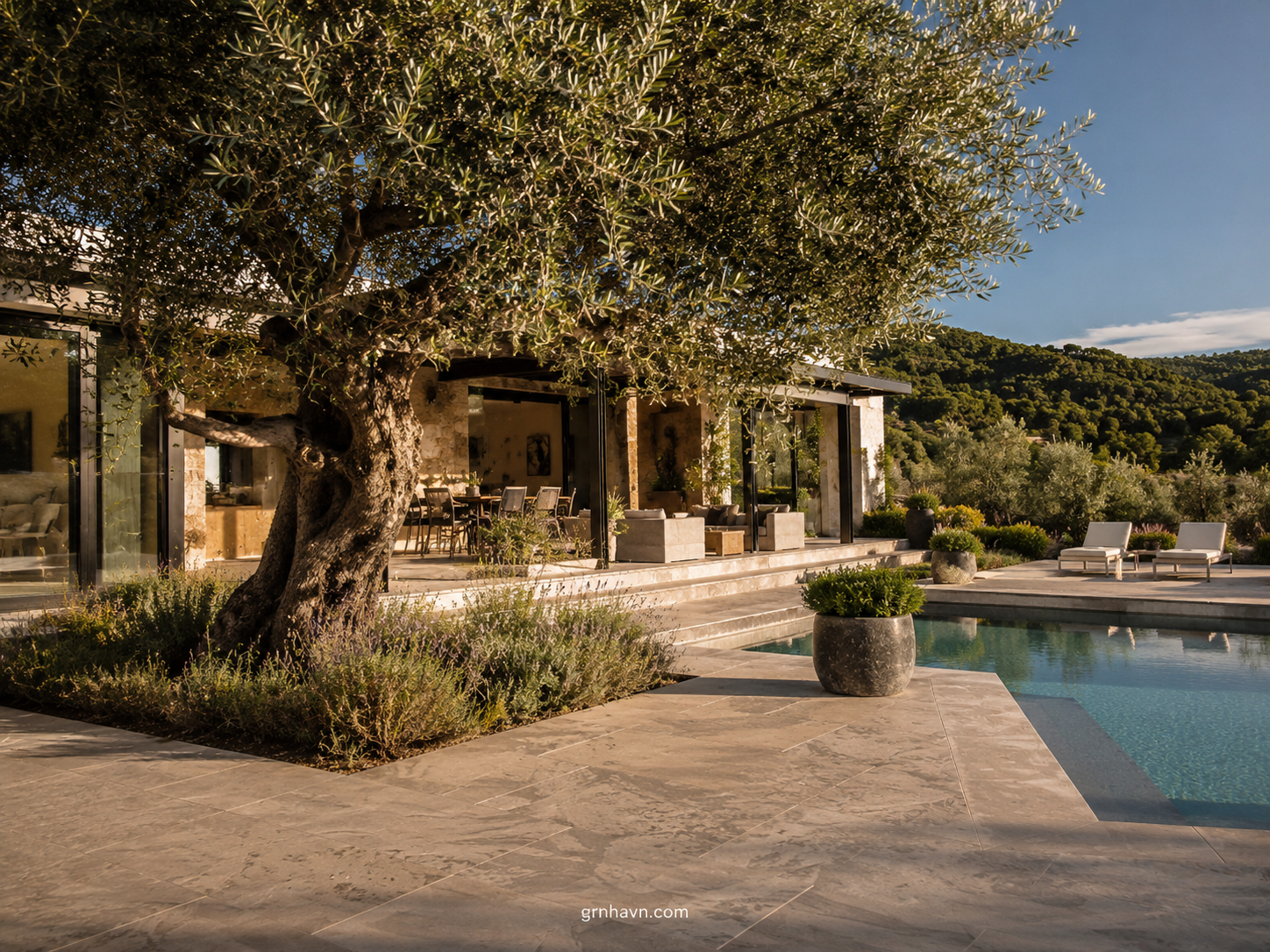
Why Is the Arbequina Olive Tree So Popular for Home Gardens
If there’s one olive tree variety that I recommend more than any other for home gardeners, it’s the Arbequina. I’ve grown three of them over the years — one in a container on my patio, one in the ground, and one that I kept indoors during a particularly cold winter. All three thrived, and honestly, they’ve converted more people into olive tree enthusiasts than any other variety I’ve ever recommended.
Here’s why gardeners love the Arbequina so much. First, it’s remarkably compact — unlike some olive varieties that can reach 30 feet tall, Arbequina stays manageable at 15-20 feet with proper pruning. That’s perfect for suburban yards, small spaces, and especially container growing. I’ve seen stunning Arbequina olive trees thriving on apartment balconies in containers as small as 18 inches wide.
Self-fertility is another huge advantage. Many olive varieties need a pollination partner — another olive tree of a different variety nearby to produce fruit. Not the Arbequina. It’s self-fertile, meaning you can grow a single tree and still get a respectable harvest. That makes it ideal for someone who just wants one tree, or for urban gardeners with limited space.
The fruit is exceptional too. Arbequina olives are small but incredibly oil-rich — they contain more oil per fruit than most other varieties. The oil is fruity and mild, perfect for salad dressings or drizzling over bread. You’ll typically get your first harvest in year 2-3 after planting, which is remarkably fast for an olive tree. In Europe, USDA zones 8-11, the Arbequina harvests from late October through December. In America, timing varies by region but generally follows the same window — watch for the fruit to turn from green to purplish-black.
For container growing, use a pot at least 18-24 inches in diameter with excellent drainage. Use a well-draining potting mix (add perlite or pumice). Prune in late winter to maintain shape — aim for an open center that allows light to reach all branches. For ground planting, space at least 15 feet from other trees or structures. Full sun is non-negotiable — at least 6 hours daily.
“The Arbequina isn’t just an olive tree — it’s a gateway to making your own olive oil, and there’s nothing quite like the taste of homegrown.”
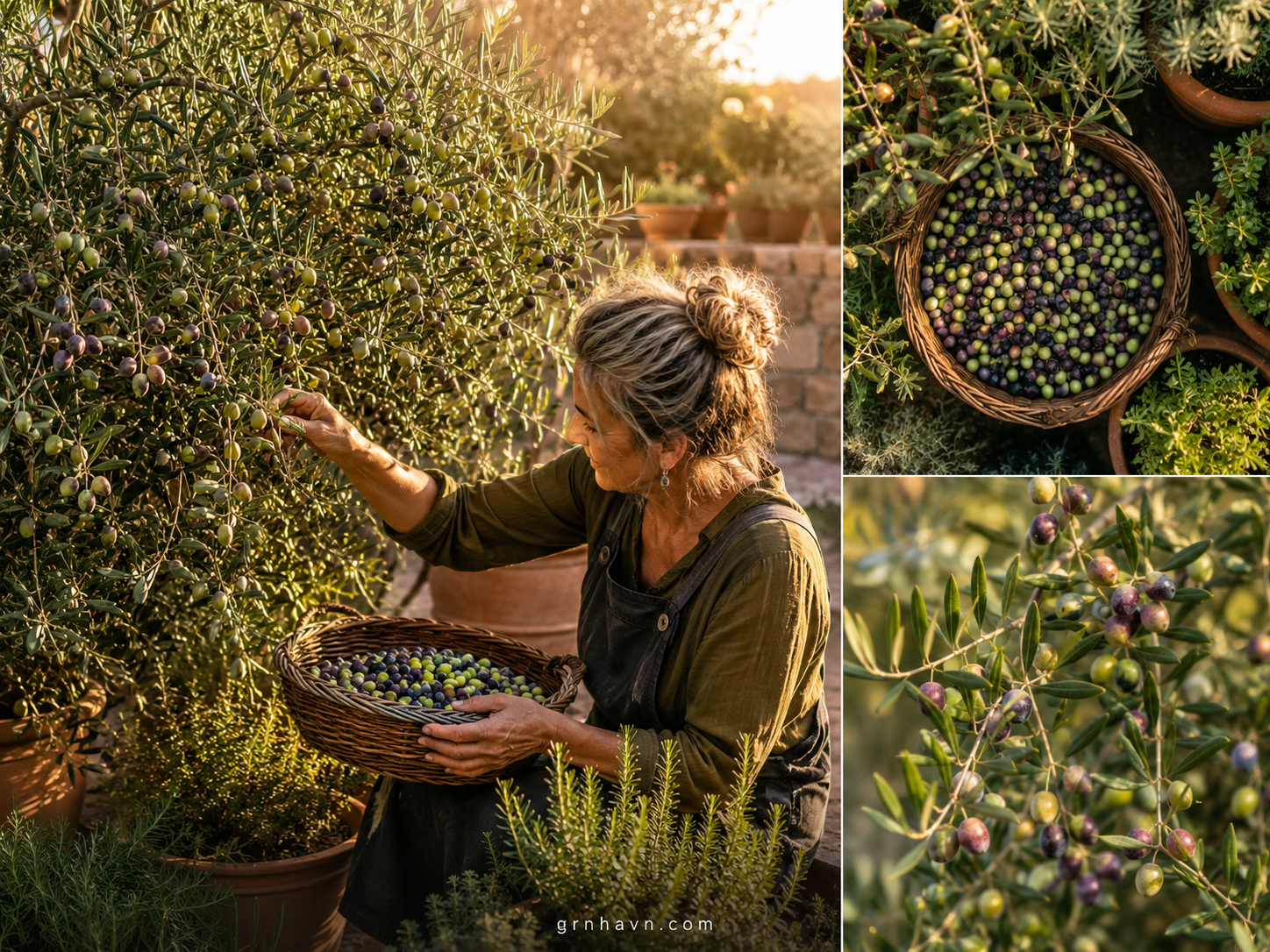
Where to find locally: Most independent garden centers and nurseries carry Arbequina — call ahead as they may need to order it. In Europe, search “Arbequina olivo” at vivai (plant nurseries). In America, try local nurseries or farmer’s markets where they sell fruit trees.
Alternative sourcing: Fruit tree nurseries online ship bare-root trees in winter. Facebook Gardening groups often have local people selling propagated cuttings. For containers, home improvement stores like Lowe’s or Home Depot sometimes carry smaller Arbequina trees.
Quick online options: Amazon and specialized fruit tree nurseries like Raintree Nursery or Grow Organic carry Arbequina trees. Look for 1-year or 2-year-old trees for best establishment success.
Looking for Fragrant Flowers? Try a Sweet Olive Tree
The first time my sweet olive tree bloomed, I literally gasped out loud. I’d had the tree for over a year, growing steadily but unremarkably, and then one October morning I walked into my garden and the air was absolutely intoxicating. It smelled like the most expensive perfume you’ve ever imagined — apricot and jasmine and something warmer and richer that I still can’t quite describe. I spent an hour just standing near it, breathing deeply.
Here’s an important thing to understand: sweet olive (Osmanthus fragrans) is not a true olive tree. They’re completely different species. But in my experience, the confusion makes sense — they share that same silvery-green foliage and Mediterranean feel, plus the sweet olive has that incredible fragrance that puts it in a league of its own. Some people call it “tea olive” because the flowers can be used to flavor tea, though that’s different from the Tea Olive we’ll cover next.
Sweet olive blooms appear in cycles — the exact timing depends on your climate. In warmer regions (zones 7-9), you might get flowers in both spring and autumn. In cooler climates, expect one major bloom period, typically in fall. The tiny white or yellow-orange flowers are small but powerful — one tree can fragrance an entire yard. Some varieties produce orange flowers (Aurantiacus) while others stay creamy white (Albus) — both are equally fragrant.
In the garden, sweet olive works beautifully as a hedge, a specimen plant near an entryway (so you can smell it every time you come home), or trained as a small tree. They tolerate pruning well — you can shape them or let them grow more naturally. For best flowering, give them full sun to partial shade and regular water. They aren’t as drought-tolerant as true olives, so plan to water during dry spells. A light feeding in spring with balanced fertilizer helps too.
“The sweet olive doesn’t just bloom — it performs. One tree in flower can transform your entire garden into a perfume factory.”
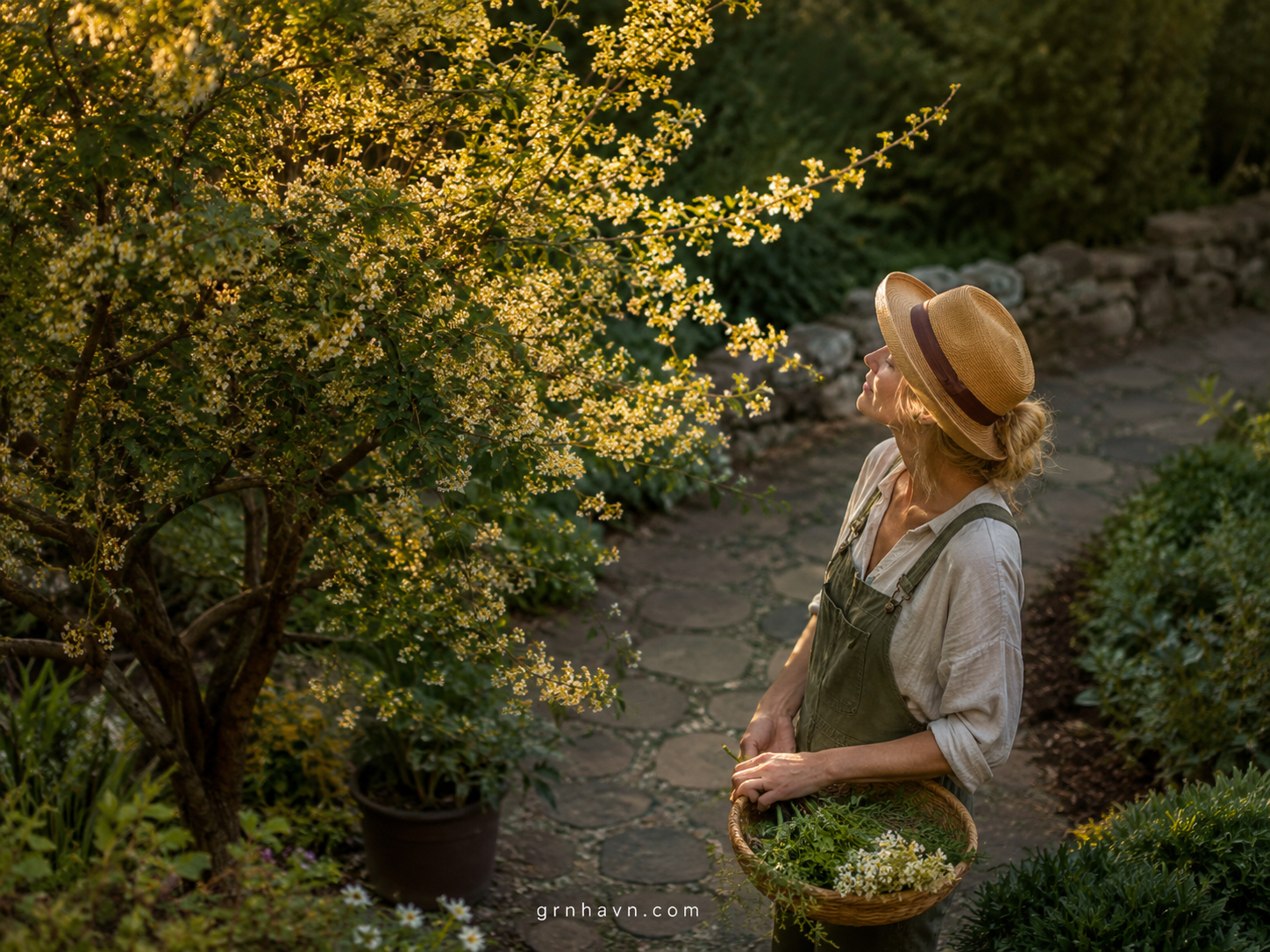
What Is a Black Olive Tree and Is It Right for Your Landscape
Here’s where olive tree terminology gets genuinely confusing. When people say “black olive tree,” they could mean one of several very different things. Let me untangle this for you, because I spent years confused about this and I want to save you the same frustration.
First, there’s the true black olive — these are simply olives that have ripened to their fully mature stage. Olive fruit starts green, goes through various shades of purple and burgundy, and finally reaches black when fully ripe. These are the olives you might find in the grocery store labeled as “ripe black olives.” They’re used for eating, for oil, and for cooking. So if you have a fruiting olive tree and leave the fruit on until it naturally falls, you’ll eventually have black olives.
But there’s another plant commonly called “black olive” that isn’t an olive at all — it’s Bucida buceras, also called “black olive” or “black olive tree” in the ornamental plant trade. This is a landscape tree native to tropical regions, valued for its attractive form and tolerance to various conditions. It produces small fruit that vaguely resembles olives, hence the name. It’s important to know this isn’t edible like a true olive — it’s purely ornamental. If you’re in a tropical climate (Florida, Hawaii, Puerto Rico), you might see this in landscaping.
For the rest of us interested in actual edible olives, the ripening stages matter for harvest timing. Green olives are harvested early for a firm, peppery flavor. “Turning color” olives (starting to purple) are mid-ripening. Black olives are fully ripe — they’re softer, higher in oil content, and have a more mild, buttery flavor. If you’re growing olives for oil, you’ll often wait for some to reach black ripeness. For table olives, many people prefer the green or “turning” stage.
True edible black olives are rich in healthy fats and have been part of the Mediterranean diet for thousands of years. They contain polyphenols, vitamin E, and healthy monounsaturated fats. If you’re planning to grow olives for consumption, know that different varieties perform better in different climates — check with your local extension office for recommendations.
“A true black olive is simply nature’s way of saying ‘I’m ready.’ The journey from green to black is where the magic of flavor development happens.”
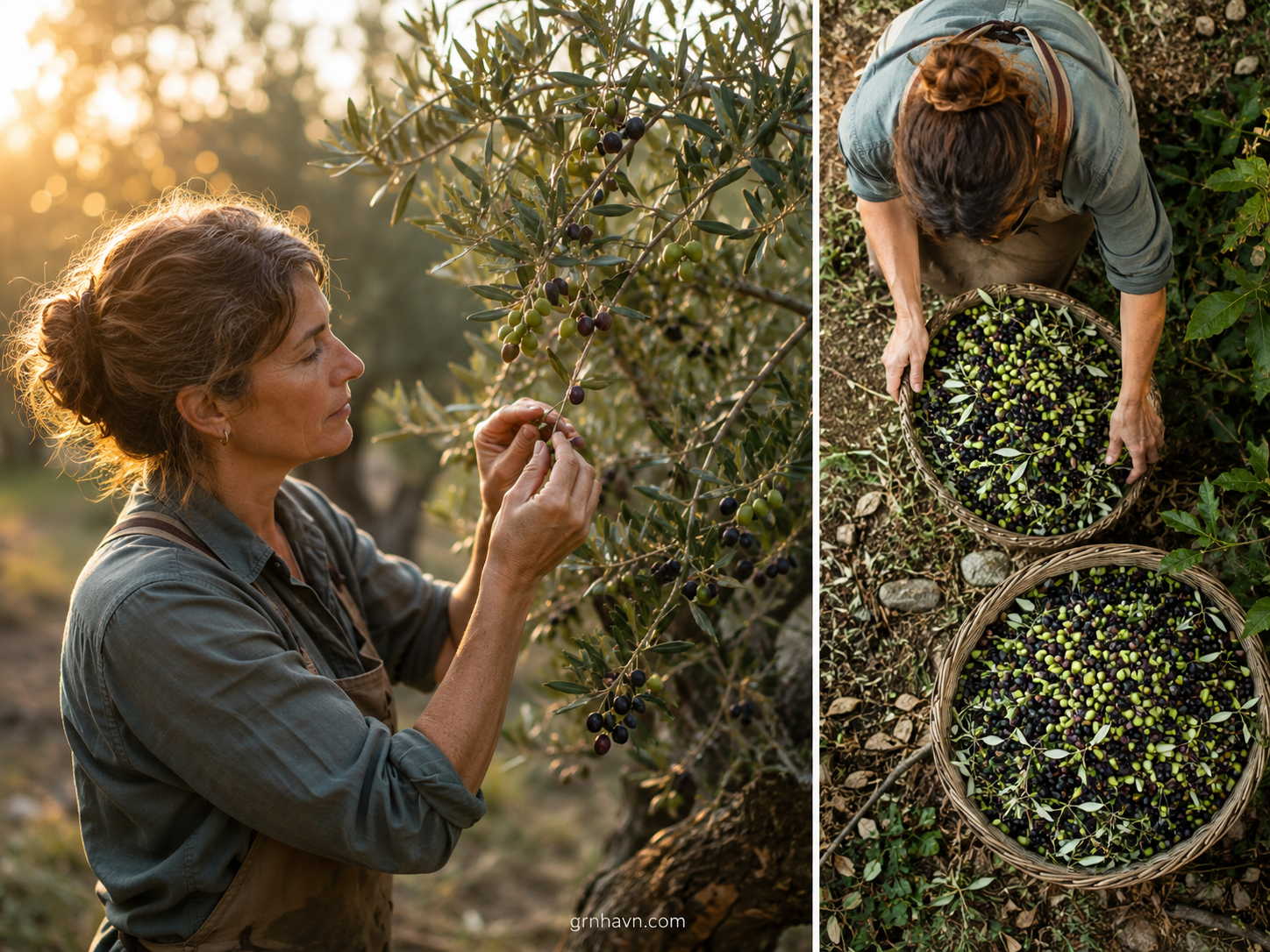
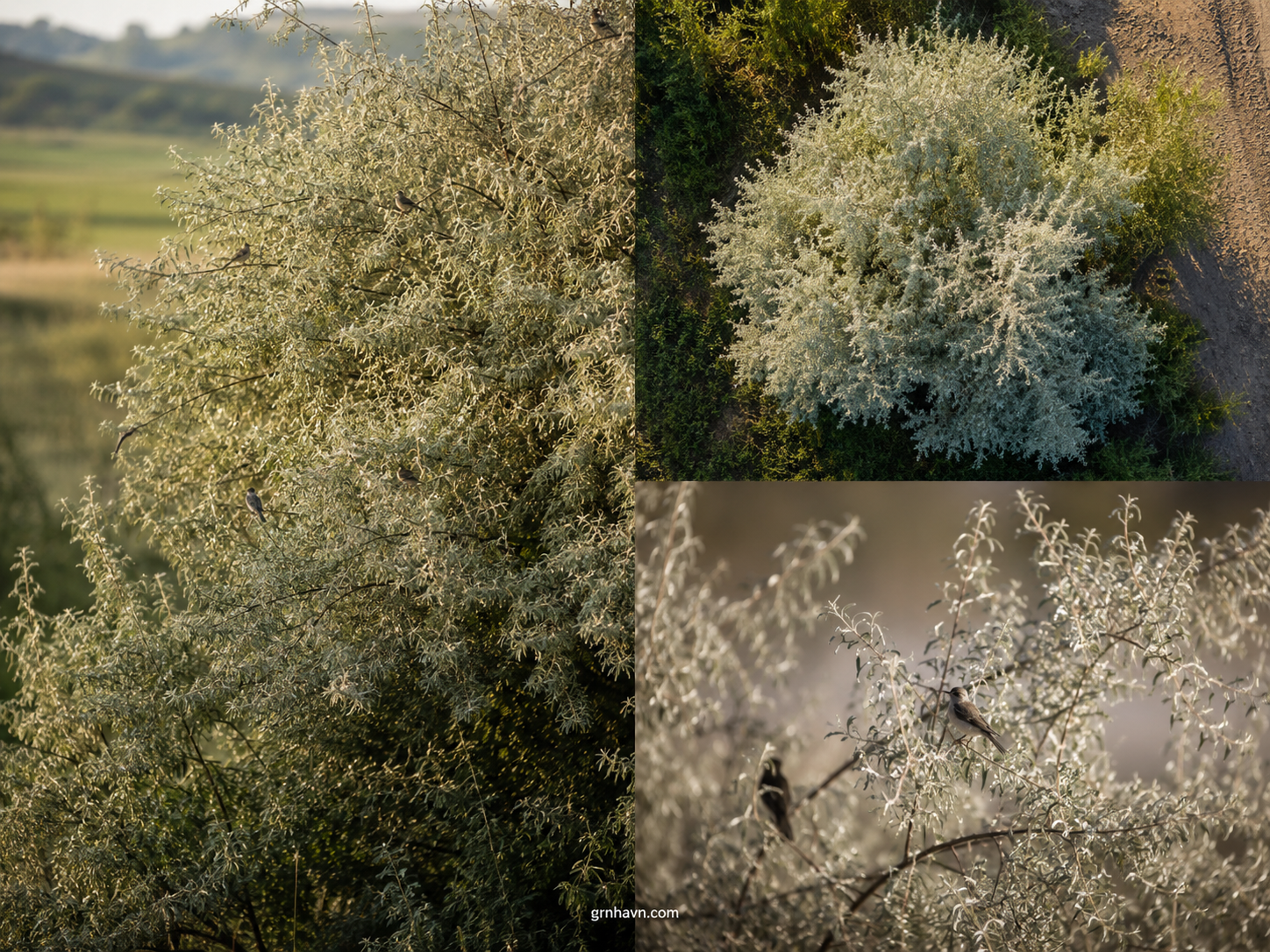
Is a Russian Olive Tree Helpful or Invasive
I have a complicated relationship with Russian olive. When I first learned about it, I was genuinely excited — here’s a tree that’s incredibly hardy, thrives in poor soil, drought conditions that would kill most other plants, and produces beautiful silvery foliage plus fragrant yellow flowers. What’s not to love? Then I did more research, and the picture became much more nuanced.
Russian olive (Elaeagnus angustifolia) is a original resident of parts of Asia and Eastern Europe. It was introduced to North America in the early 1900s as an ornamental and for practical uses like windbreaks and erosion control. And here’s where it becomes controversial: it’s now considered invasive in many parts of the United States, particularly in the western states and along waterways. It spreads aggressively through bird-dispersed berries and can outcompete native vegetation.
So what are the legitimate uses for Russian olive, and when should you avoid it? Let’s start with the positives. This tree is exceptionally hardy — it tolerates cold (down to USDA zone 3), extreme heat, poor soil, salt, and drought once established. If you have a challenging site where nothing else will grow, Russian olive might actually thrive. It makes an excellent windbreak in exposed locations. The berries, while not a major food source for humans, do provide wildlife value. And its nitrogen-fixing ability can actually improve poor soil over time.
The concerns are real, though. In many states, planting Russian olive is discouraged or even illegal. It spreads by seeds (the berries) that birds eat and disperse widely. It also produces root suckers that create new plants around the parent tree. If you’re in an area where it’s considered invasive, there are alternatives — silverberry (Elaeagnus commutata) is a similar-looking native option, or consider Russian olive’s well-behaved relative, the autumn olive (though that has its own issues — see next section).
If you do decide to plant Russian olive in an appropriate setting (and it’s allowed in your area), choose a sterile variety if available, and definitely remove berries before they ripen to prevent spread. Use it in controlled situations like erosion control on your own property, not near natural areas. The bottom line: Russian olive is a useful tree with significant drawbacks. Know your local regulations and consider alternatives before planting.
“Russian olive teaches us an important lesson: even a beautiful, useful plant can become a problem when it escapes into the wrong environment.”
Why Gardeners Love the Tea Olive Tree for Privacy and Fragrance
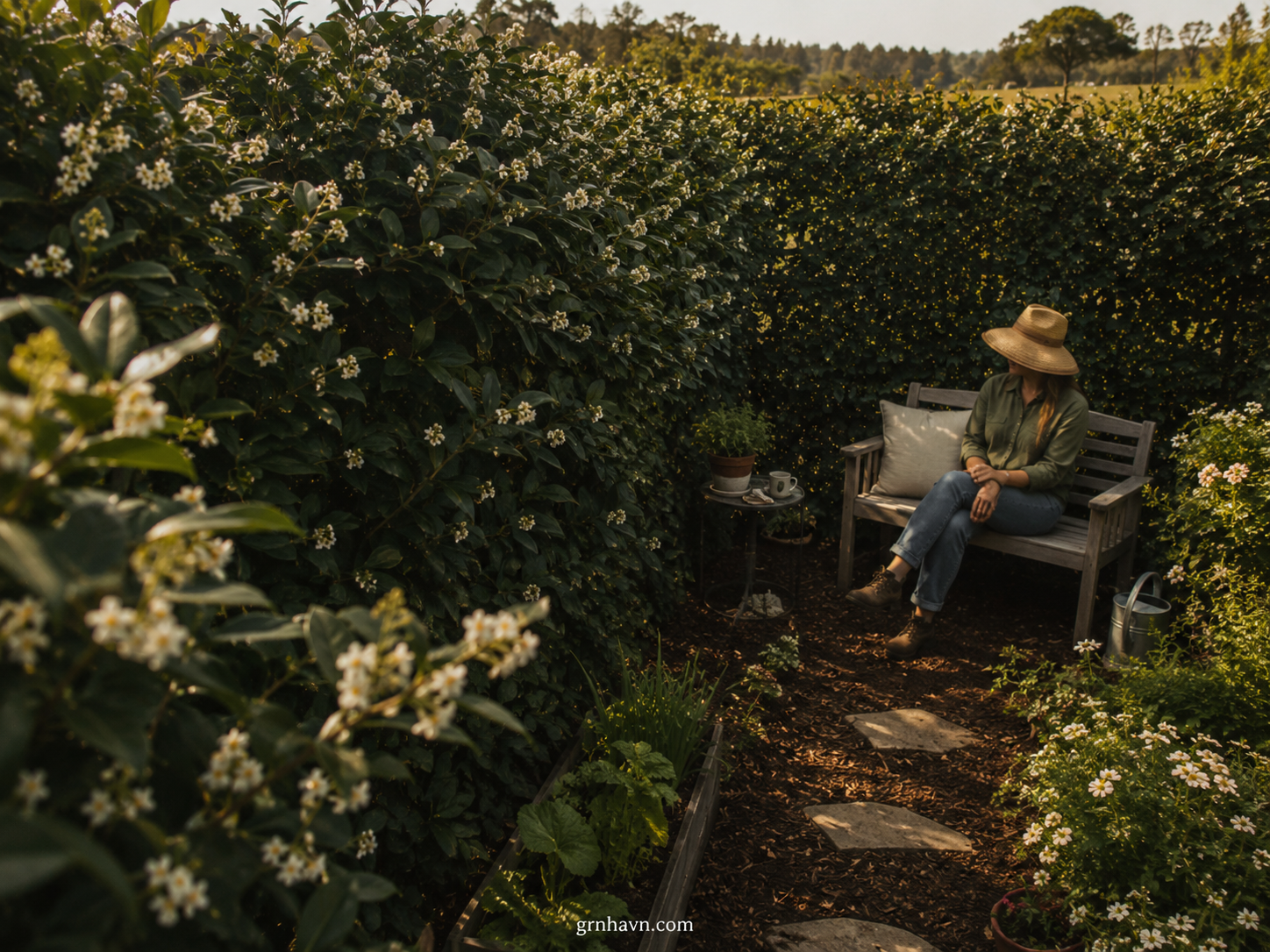
If sweet olive is the perfume, tea olive is the privacy screen with a secret. These incredible plants combine the most desirable qualities a gardener could ask for: dense, evergreen foliage that creates a living wall, tolerance for heavy pruning (you can shape it however you want), and those signature tiny but incredibly fragrant flowers. My neighbor has a row of tea olives along their property line, and honestly, it makes me a little jealous every time I walk past.
Tea olive (Osmanthus fragrans, interestingly the same species as sweet olive — the names are used somewhat interchangeably) is a dense, evergreen shrub or small tree that can reach 10-20 feet tall and 8-15 feet wide. The leaves are dark green, glossy, and somewhat holly-like in appearance — hence one of its common names, “holly olive.” This makes it an excellent choice for privacy screening, foundation planting, or as a hedge.
What sets tea olive apart is its versatility in the landscape. Because it tolerates heavy pruning, you can maintain it at whatever height you need — down to a 4-foot hedge or let it grow into a 15-foot specimen tree. It works beautifully as a foundation plant along the front of a house, providing year-round greenery that frames your home. It can be trained as an espalier against a wall. Or you can let it grow naturally as a standalone specimen. The options are genuinely endless.
Common tea olive varieties include Fortune’s Osmanthus (Osmanthus × fortunei), a hybrid with more pronounced holly-like leaves, and the standard Osmanthus fragrans with its simpler leaves. Some varieties bloom more heavily than others, but all produce that characteristic sweet fragrance. Tea olive is cold-hardy to about USDA zone 7, though it may need protection in harsh winters. In cooler climates, it grows well in containers that can be moved to sheltered locations.
“A tea olive hedge isn’t just a boundary — it’s a living, breathing wall that changes with the seasons and fills your garden with perfume you can smell from three houses away.”
Is Buying a Full Grown Tea Olive Tree Worth the Extra Cost
I get it. You’re impatient (or maybe you’re just practical). You don’t want to wait years for a tiny sapling to grow into the full privacy screen you need now. You see those mature tea olive trees at the nursery — thick trunks, full canopies, instant impact — and you wonder: is the extra cost worth it? Let me share what I’ve learned from both buying young and buying mature.
The short answer is: it depends. Full-grown tea olive trees (typically 6-10 feet tall when sold as “mature”) can cost anywhere from $200-500 or more, compared to $30-80 for a small plant. That’s a significant investment. But here’s what you’re really paying for: time. That small plant might take 5-10 years to reach the same size. If you need privacy now — maybe you’re closing on a new home, or you’ve just had a neighbor build too close for comfort — the mature tree delivers immediate results.
But there’s more to consider than just instant gratification. Mature trees have deeper root systems, which means they’re more established and can handle environmental stress better than young plants. However, they’re also harder to transplant successfully. The larger the tree, the more stress it experiences when moving. There’s always a risk that a mature tree won’t establish well in its new location, regardless of how carefully you plant it.
Tea olives grow slowly — maybe 6-12 inches per year. That’s actually one of the reasons they’re so good for hedges and screening: they don’t outgrow their space quickly. If you’re patient, buying younger plants and letting them grow gives you more control over the final shape and can actually result in a healthier, more adaptable tree in the long run. The trade-off is time. Young plants are more flexible, establish faster, and cost a fraction of mature specimens.
My recommendation: if your budget allows and you have an immediate need, a mature tree makes sense. But if you can wait two or three years, buy younger and enjoy the journey of watching your tea olive grow. Either way, make sure you’re buying from a reputable source and that the tree is healthy before you bring it home. Look for vibrant leaves, no signs of pests, and a trunk that’s firm and undamaged.
“Patience with a tea olive tree isn’t just a virtue — it’s a gift you give yourself. Watching something grow from small to magnificent connects you to your garden in a way instant gratification never can.”
Should You Plant an Autumn Olive Tree or Avoid It
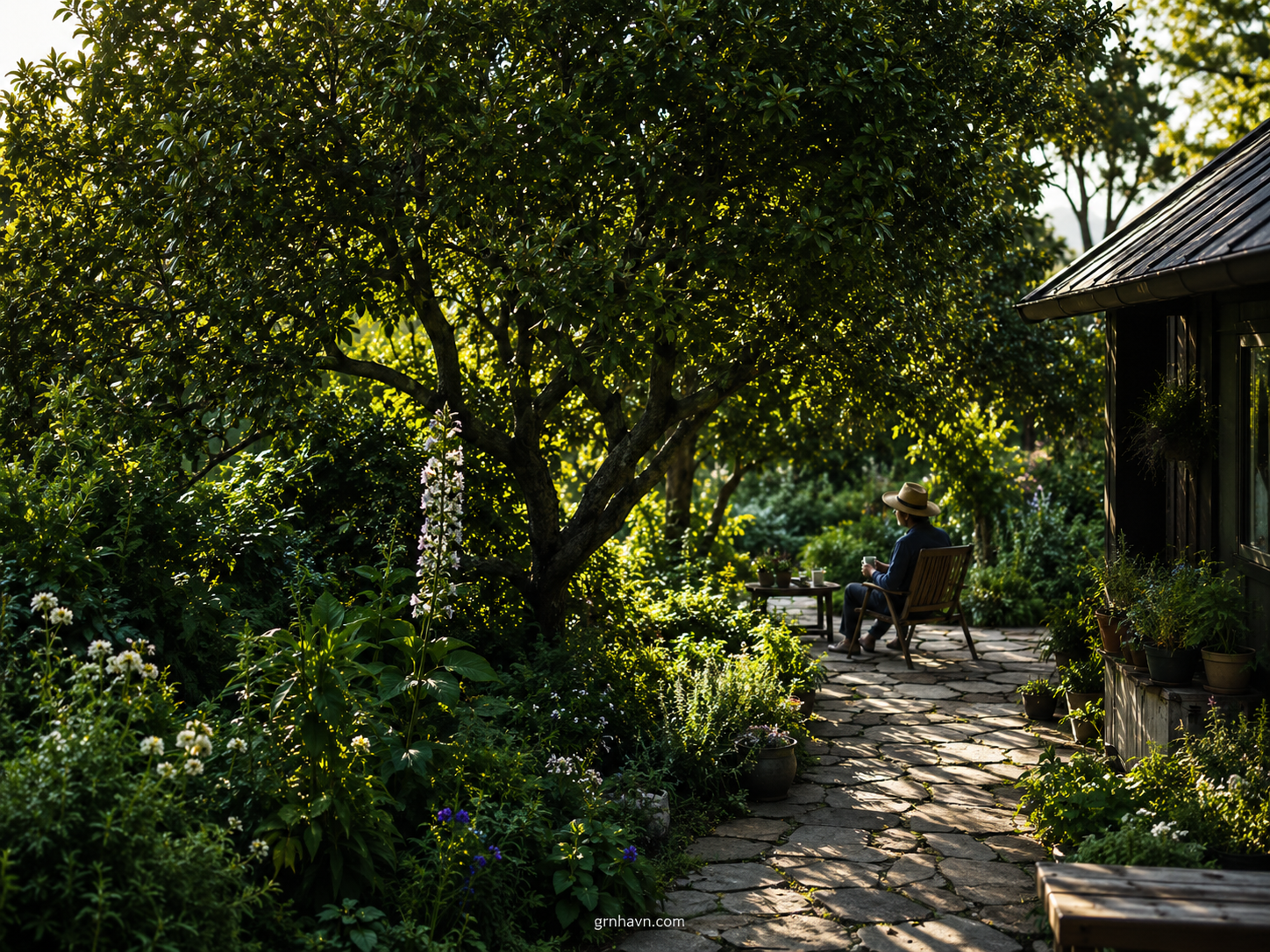
Autumn olive brings back memories for me. When I was a kid, we’d go hiking in the fall and these bright red berries would be everywhere — my parents called them “autumn olives” and we’d eat them by the handful. They had a unique, slightly sweet but astringent taste that I still remember. Years later, when I learned more about the plant, my nostalgia hit a bit of a snag.
Autumn olive (Elaeagnus umbellata) is another one of those plants with a complicated reputation. Like its relative Russian olive, it’s a nitrogen-fixing shrub that can thrive in poor soil. It’s incredibly hardy and produces abundant berries that are surprisingly nutritious — they’re high in lycopene (yes, the same antioxidant found in tomatoes), vitamin C, and other beneficial compounds. In Asia, where it’s native, the berries are used in jams, teas, and traditional medicine.
Here’s the problem: in many parts of the eastern United States, autumn olive has become invasive. It produces huge numbers of seeds dispersed by birds, and it can dominate woodland edges and open areas, outcompeting native vegetation. Many states now have it on their invasive species lists and actively work to control its spread. If you’re in the eastern US, planting autumn olive is generally not recommended.
However, context matters. In areas where it’s not considered invasive (parts of the western US, for example), and in controlled garden settings, autumn olive can still have a place. The berries really are delicious when fully ripe — think of them as a unique foraging treat. The plants are attractive and provide good wildlife habitat. If you do plant it, be aggressive about removing berries before they drop to prevent spread, and consider a sterile variety if available.
My honest advice: unless you have a specific reason to grow autumn olive and you’re in an appropriate region, consider alternatives. There are many beautiful native alternatives that provide similar benefits without the invasive risk. That said, if you’re in an area where autumn olive is already established and you’re just working with what’s there, enjoy the berries responsibly — they’re a unique taste of autumn that you won’t find in any store.
“Autumn olives are a reminder that even beloved plants have contexts where they don’t belong — and that’s okay. Sometimes the best choice is appreciating something in the wild rather than bringing it home.”
Why Is the Texas Olive Tree Perfect for Hot, Dry Landscapes
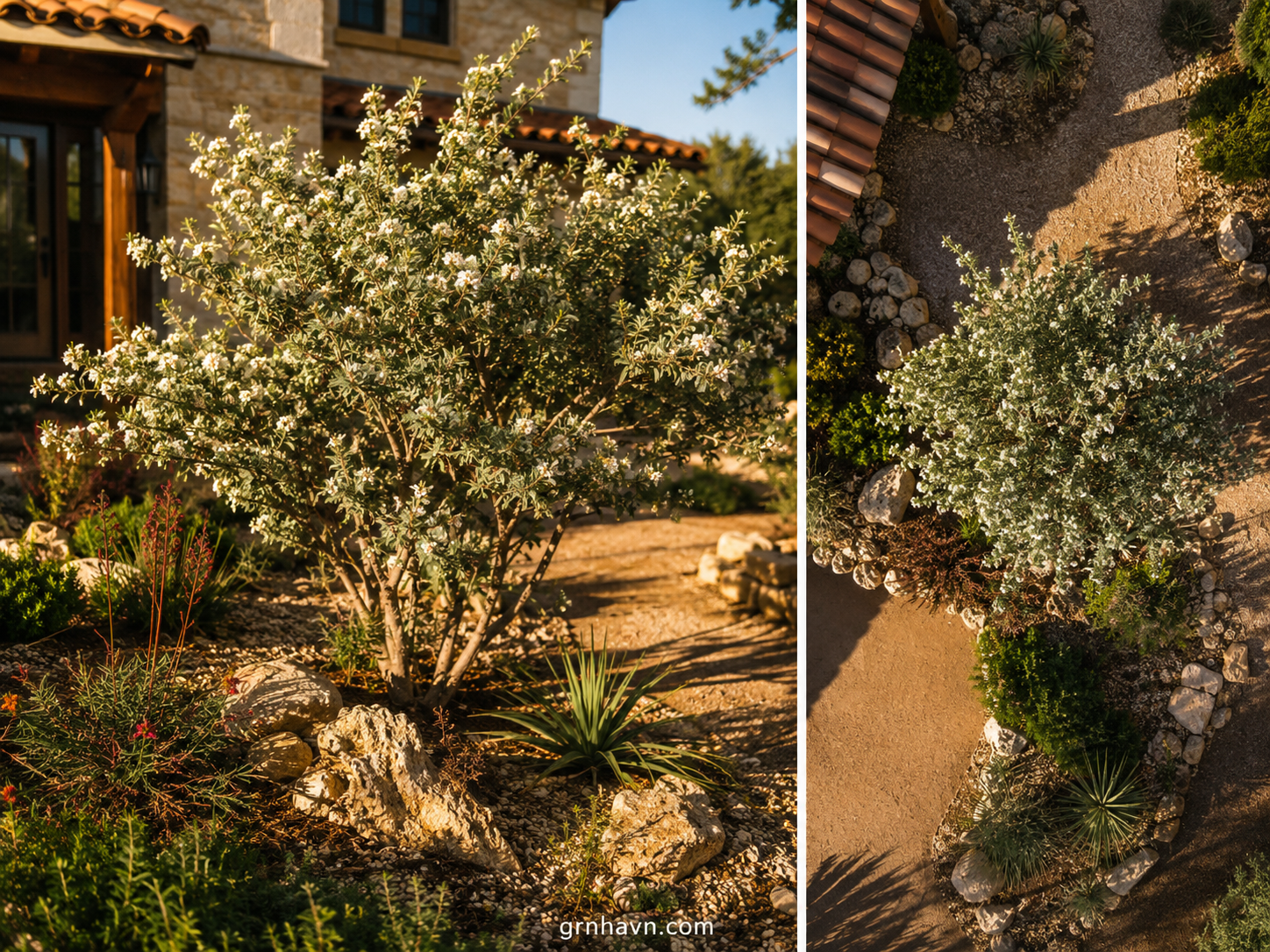
Texas olive might just be the most unfairly overlooked ornamental tree in the southwestern United States. I discovered it on a trip to Big Bend National Park, where it was growing wild in the most arid, brutal conditions I could imagine — rocky soil, triple-digit temperatures, relentless sun. Yet there it was, covered in delicate white trumpet-shaped flowers and looking absolutely beautiful. I was instantly hooked.
Here’s the first thing you need to know: Texas olive (Cordia boissieri) is not a true olive tree. It’s in a completely different genus. But it earned its common name because its small fruits resemble true olives in appearance — though they’re technically not the same thing. What makes Texas olive special is its incredible toughness. Native to South Texas and northern Mexico, it’s evolved to thrive in conditions that would kill most ornamental plants.
Let me paint a picture of what Texas olive offers. It grows 15-25 feet tall with a similar spread, creating a rounded, attractive form. The leaves are a beautiful deep green and semi-evergreen (they may drop in very cold winters but return quickly). But the real showstopper is the flowers — pure white, trumpet-shaped, and appearing in clusters throughout the warm season. They attract butterflies and hummingbirds, adding life to your landscape.
Texas olive is the definition of low-maintenance once established. It handles intense heat (110°F+ is no problem), thrives in full sun, and is extremely drought-tolerant. It handles alkaline soil like a champ — important in Texas and other areas with chalky, high-pH soils. It has no serious pest or disease problems. If you live in a hot, dry climate (think Phoenix, Tucson, San Antonio, or anywhere in South Texas), this tree was made for your landscape.
The small fruit produced by Texas olive is technically edible but not particularly notable — don’t expect olive-like flavor or culinary use. Think of it as a bonus for wildlife rather than a food source. Plant Texas olive as a specimen tree, in groupings, or as part of a xeriscape design. It makes an excellent replacement for more water-hungry trees in arid landscapes.
“Texas olive proves that beauty and toughness aren’t opposites — this desert native brings graceful elegance to the harshest landscapes without asking for anything in return.”
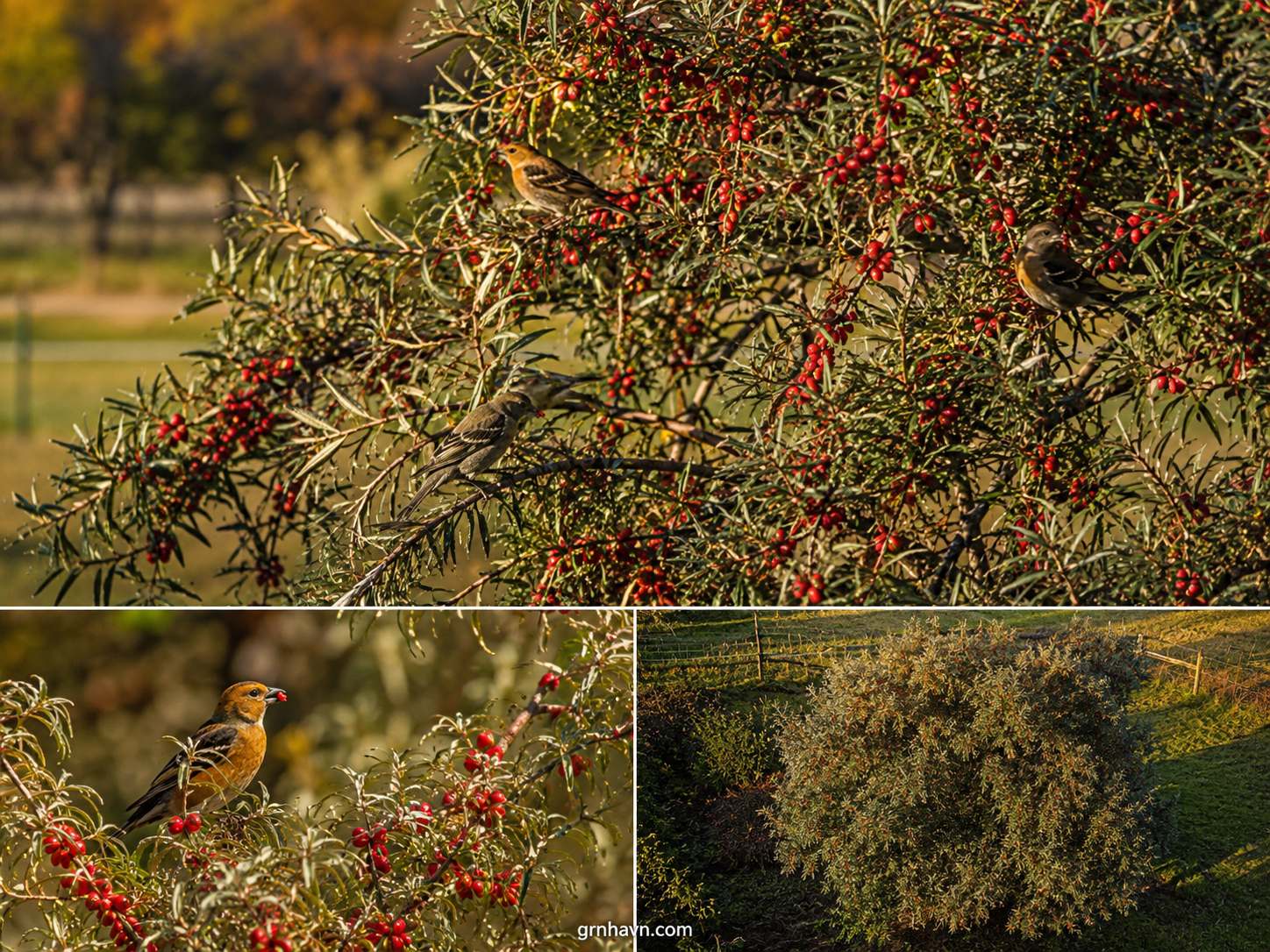
Texas olive might just be the most unfairly overlooked ornamental tree in the southwestern United States. I discovered it on a trip to Big Bend National Park, where it was growing wild in the most arid, brutal conditions I could imagine — rocky soil, triple-digit temperatures, relentless sun. Yet there it was, covered in delicate white trumpet-shaped flowers and looking absolutely beautiful. I was instantly hooked.
Here’s the first thing you need to know: Texas olive (Cordia boissieri) is not a true olive tree. It’s in a completely different genus. But it earned its common name because its small fruits resemble true olives in appearance — though they’re technically not the same thing. What makes Texas olive special is its incredible toughness. Native to South Texas and northern Mexico, it’s evolved to thrive in conditions that would kill most ornamental plants.
Let me paint a picture of what Texas olive offers. It grows 15-25 feet tall with a similar spread, creating a rounded, attractive form. The leaves are a beautiful deep green and semi-evergreen (they may drop in very cold winters but return quickly). But the real showstopper is the flowers — pure white, trumpet-shaped, and appearing in clusters throughout the warm season. They attract butterflies and hummingbirds, adding life to your landscape.
Texas olive is the definition of low-maintenance once established. It handles intense heat (110°F+ is no problem), thrives in full sun, and is extremely drought-tolerant. It handles alkaline soil like a champ — important in Texas and other areas with chalky, high-pH soils. It has no serious pest or disease problems. If you live in a hot, dry climate (think Phoenix, Tucson, San Antonio, or anywhere in South Texas), this tree was made for your landscape.
The small fruit produced by Texas olive is technically edible but not particularly notable — don’t expect olive-like flavor or culinary use. Think of it as a bonus for wildlife rather than a food source. Plant Texas olive as a specimen tree, in groupings, or as part of a xeriscape design. It makes an excellent replacement for more water-hungry trees in arid landscapes.
“Texas olive proves that beauty and toughness aren’t opposites — this desert native brings graceful elegance to the harshest landscapes without asking for anything in return.”
How Have the Oldest Olive Trees Survived for Thousands of Years
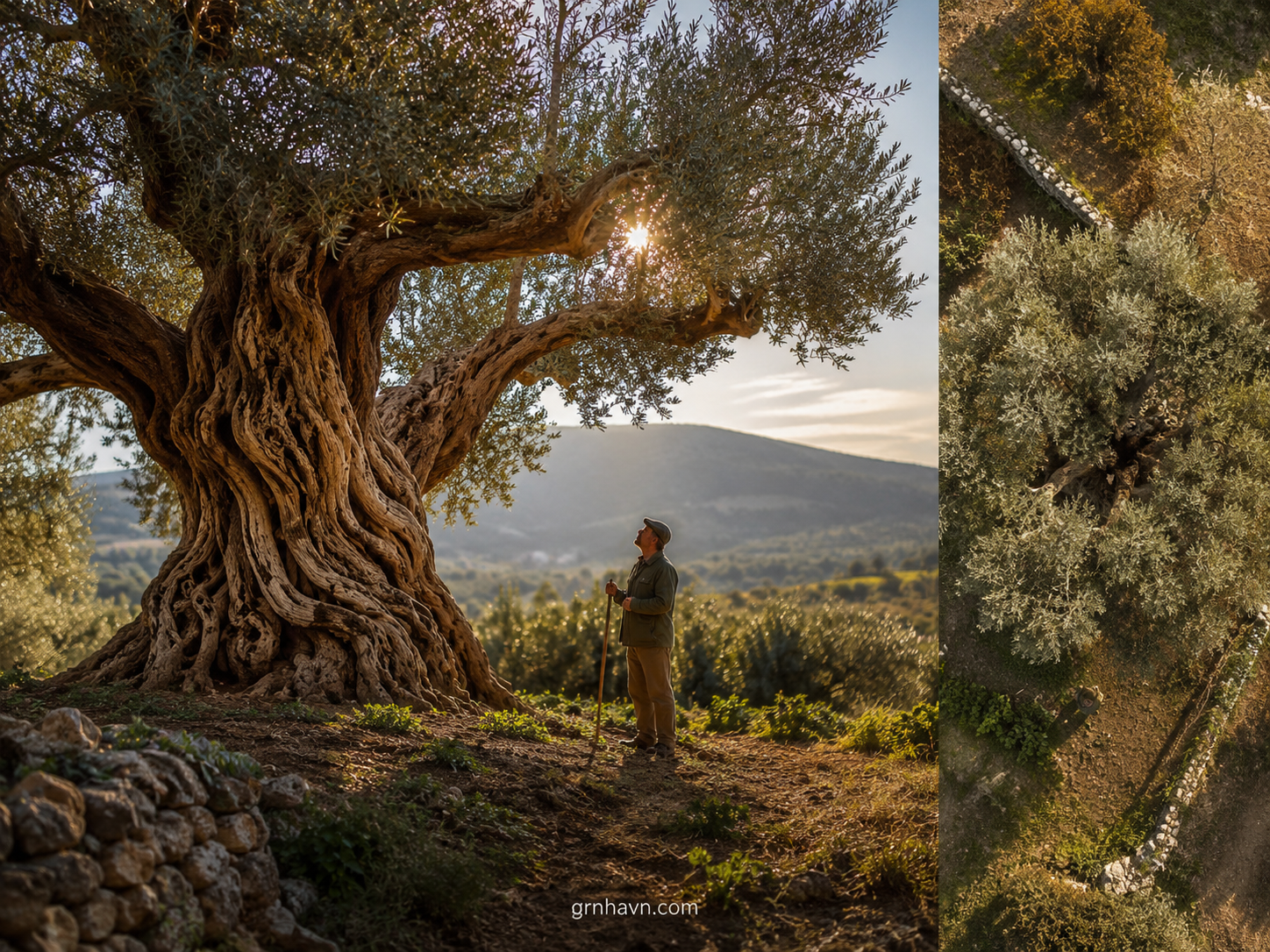
I dream about visiting the oldest olive tree in the world. There’s something almost spiritual about the idea of a living thing that was already ancient when the Colosseum was built, that was bearing fruit when Charlemagne ruled Europe. The oldest known olive trees are over 3,000 years old — and some estimates suggest there might be individual trees in the Mediterranean that are even older than documented records show. These aren’t just trees; they’re living monuments to resilience.
Let me tell you about a few of the most famous ancient olive trees. The Olive Tree of Vouves in Crete is perhaps the most famous — it’s estimated to be between 3,000 and 5,000 years old and still produces olives. On the Greek island of Crete, in the village ofAno Vouves, this gnarled, hollow-trunked survivor continues to grow despite being ancient by any standard. In Sardinia, Italy, the tree known as “S’Oliva” in Luras is estimated at over 3,000 years. And in Bethlehem, the Al Badawi olive tree is one of the oldest, with some estimates placing it at 4,000-5,000 years.
What makes these trees survive so incredibly long? Several factors come together. First, olive trees have incredibly deep root systems — their roots can reach groundwater tables, allowing them to survive drought conditions that would kill other plants. Second, many of the oldest trees are located in microclimates that protect them from extreme weather — on mountain slopes where cold air drains away, for example, or in protected valleys.
Third, olive trees have remarkable genetic resilience. They’re naturally resistant to many diseases and pests that affect other fruit trees. And they’ve evolved to survive fire — their roots can resprout even after the above-ground portion is burned. This made sense in their native Mediterranean climate where fires were natural occurrences.
What can we learn from these ancient survivors to help our own olive trees live longer? Water deeply and infrequently rather than shallow frequent watering — this encourages deep root development. Ensure excellent drainage — olive trees hate “wet feet” and will decline in waterlogged soil. Practice natural pruning — only remove dead or diseased wood, letting the tree maintain its natural form. And consider using organic compost rather than synthetic fertilizers — the ancient trees thrived without chemical inputs. Follow these principles, and your olive tree might just be around for your great-great-grandchildren to enjoy.
“The oldest olive trees teach us that survival isn’t about struggling against nature — it’s about adapting to it, growing slowly, and finding deep roots when the surface gets tough.”
⚠️ Common Mistakes to Avoid
❓ Frequently Asked Questions
This question is about a real olive tree suddenly dropping leaves in winter. The causes can be: 1) cold stress (leaves fall when temperatures drop below 20°F/-6°C), 2) overwatering (the tree is dormant in winter, overwatering can cause root rot). Solution: Check the water by touching the soil — if it is wet, stop watering. Add 2-3 inches of mulch around the base of the tree, and move the tree indoors or into a greenhouse in severe winters. In Europe, similar principles apply — protect from frost and reduce watering November through February.
Many people are disappointed when they buy cheap fake olive trees because the leaves are shiny plastic and the trunk is unnatural. Answer to this question: 3 quick changes — 1) Bend the branches by hand to give them a natural shape, 2) Use a light matte spray to give the glossy leaves a matte finish, 3) Change the default plastic pot to a ceramic or rattan pot. These changes will make the tree look like a $500 designer piece in 5 minutes.
Faux olive trees quickly accumulate dust and the leaves look lifeless. Reason: Static electricity attracts dust. Solution: 1) Gently wipe the leaves with a microfiber cloth dampened with mild soapy water, 2) Blow dry the dust using a blow dryer on cool setting, 3) Lightly spray fabric softener (a mixture of water and fabric softener) — this reduces static and repels dust. Once every 2-3 weeks, the tree will look brand new.
Reasons for artificial olive tree leaning: Underweight or insufficient support inside the trunk. Solutions: 1) Add weight by placing concrete blocks or sandbags under the pot, 2) Attach metal or wooden stakes to the trunk that reach the bottom of the pot, 3) Change the pot to a heavy-duty ceramic or stone pot. These solutions are permanent and will keep the tree upright for 10+ years.
Gardeners are frustrated when a fruitless olive tree produces few fruits. Cause: Pollination from another nearby olive tree or stress on the tree. Solution: 1) Cut off the fruit clusters as soon as they bloom, 2) Use a fruit-suppressant spray (Florel or Ethephon) — this stops fruit formation, 3) If possible, remove the surrounding fruiting olive trees. Choose Swan Hill or Wilsonii varieties for a completely fruitless tree.
Arbequina olive trees grow tall but not bushy, resulting in low yield. Cause: Improper pruning or not pruning. Solution: 1) Cut the top 6-12 inches of the main trunk in the first 2-3 years — this encourages side branch growth, 2) Cut off crossing branches and inward-growing branches at the end of each winter, 3) Give the tree an open-center shape to allow light and air to enter. This technique will make the tree bushy within 1 year and double the yield.
Reasons for sweet olive flowers not having fragrance: 1) Iron and manganese absorption decreases when the soil pH is above 7.0, 2) Excess nitrogen (encourages leaf growth over flower growth), 3) Not getting enough sunlight. Solution: 1) Test the soil and add sulfur or peat moss to lower the pH to 6.0-6.5, 2) Apply a fertilizer rich in phosphorus and potassium (10-30-20) in the spring, 3) Move the tree to full sun (6+ hours a day). The scent will return in 2-3 weeks.
Reasons for black olive fruit falling off: 1) Untimely watering (suddenly too much water after excessive dryness), 2) Boron deficiency (lack of boron in the soil), 3) Olive Fruit Fly attack (lays eggs inside the fruit). Solution: 1) Water regularly and evenly — drip irrigation is best, 2) Apply a boron spray (1 tablespoon borax/gallon water) once a year to each tree, 3) Control fruit flies by setting yellow sticky traps. With proper care, fruit drop can be reduced by 90%.
Russian olive (Elaeagnus angustifolia) spreads aggressively because of: 1) Bird seed dispersal, 2) Root suckers, 3) Nitrogen fixing ability — it can grow in poor soil. Solutions: 1) Harvest berries from trees before fruit ripens, 2) Hand pull young plants (easily emerge from wet soil), 3) Apply glyphosate herbicide to stumps after cutting large trees (within 30 minutes of cutting), 4) Regular monitoring — Check new plants once a month. This combination method is most effective.
There are two main reasons for tea olive leaves turning brown: 1) Sunburn (the leaves burn in the intense afternoon sun — especially on weak trees), 2) Fertilizer burn (excess fertilizer or concentrated fertilizer applied directly to the roots). How to tell the difference: Sunburn burns only the southwest-facing leaves, while fertilizer burn burns the entire plant. Solution: For sunburn, use shade cloth in the afternoon sun; for fertilizer burn, wash the soil thoroughly (flushing) and then apply half the amount of fertilizer.
Reasons why mature olive trees stop growing: 1) Root Bound — roots grow in circles when grown in containers, 2) Lack of phosphorus and potassium for large trees, 3) Compacted Soil. Solutions: 1) Dig up the tree, loosen the roots, and replant in a larger container or soil, 2) Apply high-phosphorus fertilizer (Bone Meal), 3) Use an aerator or fork to loosen the soil. Growth will resume in 4-6 weeks.
Reasons for late ripening of autumn olive berries: 1) Uneven exposure to sunlight (one side of the tree gets more sun), 2) Nutrient deficiency (boron and potassium deficiency), 3) Fruiting on branches of different ages. Solutions: 1) Prune branches around the tree if necessary so that all branches receive sunlight, 2) Apply potassium-rich fertilizer (Potassium Sulfate) after fruit set, 3) Harvest ripe berries every 3-4 days — as birds eat them quickly. Ripe berries are red and soft. Harvest when fully ripe for best nutrition.
Reasons for Texas olive tree dropping before flowering: 1) Heat stress (temperatures above 100°F/38°C burn flower buds), 2) Water stress (roots don’t get enough water), 3) Sudden temperature changes (cold nights followed by hot days). Solutions: 1) Keep the soil cool with mulch (2-3 inches) in early summer, 2) Water regularly and evenly with drip irrigation (deep water every 5-7 days), 3) Protect from midday sun by using shade cloth (40-50% shade) in extreme heat. This system increases flowering rates by 70%.
The secrets of the survival of the oldest olive tree in the world (Vouves, Crete — 3,000+ years): 1) Deep root system — roots reach the groundwater table, 2) Microclimate — located on a mountain slope that protects it from extreme weather, 3) Genetic resilience — resistant to diseases and pests, 4) Low maintenance — less human intervention. Lessons for us: 1) Water deeply and infrequently (deep water once every 2-3 weeks), 2) Ensure good drainage, 3) Natural pruning (cut only dead/diseased branches), 4) Avoid chemical fertilizers and use organic compost. If you follow this method, your olive tree can live for 100+ years.
🌿 Your Olive Tree Journey Starts Here
Whether you choose a real Arbequina to press your own olive oil, a beautiful faux tree for your low-light apartment, a fragrant Sweet Olive to transform your garden into a perfume paradise, or a hardy Texas Olive for your drought-prone landscape — there’s a perfect olive tree waiting for you. I’ve shared my mistakes and my successes, my disappointments and my joys, because I genuinely believe that everyone can find joy in these remarkable trees. Pick the one that matches your space, your climate, and your lifestyle, and start your own olive tree story today.